Mobile app for Dynamics CRM is out for Android, iOS and Windows Phone platform. When you navigate to CRM in your web browser on a blackberry device you are redirected to the mobile version as well. So true to BYOD, Dynamics CRM is now available through Web clients, Outlook Clients, Tablet Clients and Mobile clients as well J
You can download the mobile apps on different platforms through their respective app stores.
When you start the app, you will be required to enter the credentials to sign in.

Note: Unlike the tablet client the mobile client allows you to sign out and sign in to another org without having to uninstall/re-install, since it only requires the credentials and not the org url to login.
Home Page

Entity configuration for mobile access
On the entity settings, check the CRM for phones option to make the entity available for access through mobile clients.

Rich Client
The mobile client unlike the earlier mobile express option provides a richer client and user experience in line with its tablet client. Though it does not provide for process driven forms, it still allows you to check on related records.
This is how an account form would look like on a mobile client

Related entities

Support for Click to Call and Click to Mail support.
You can click on a phone number field to directly dial the number on the mobile.

This however does not create a phone call record in CRM.
Similarly click on an email address to pop-up the email client prompt for composing an email.

The email again is not tracked in CRM.
Complete Task
You can check off your to-do list in CRM from your mobile by selecting the task and marking it complete

Support for lookup selection
You can now perform a lookup search similar to the webclient to select the appropriate record.

Customize Mobile form layout/design

You can even add a field on the form for read-only access by clicking on the Read Only button.
Note: When the form is rendered fields that do not have any data assigned to them are not displayed on the form in View mode. When you click Edit button, all fields are displayed.
Mobile forms also support Role-based access. Assign the roles that need to have access to a particular mobile form.
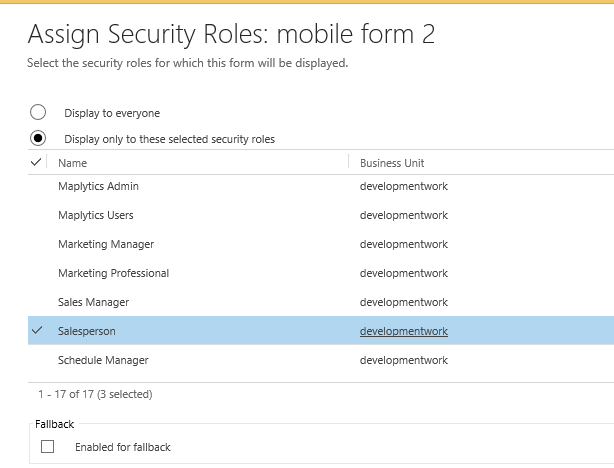
This also means you can design multiple mobile forms per entity and provide role based access to each of them.

Conclusion